

Carl Feiss
Also known as Carl L. Feiss
Carl Feiss played a seminal role in historic preservation on both the national and local level, finding creative ways to merge historic preservation with urban planning and adaptive reuse.
Carl Feiss considered himself a major proponent of cities. His ingenious methods for revitalizing cities changed the prevailing ideas behind urban planning from the perspectives of preservation, architecture, and education. Furthermore, he created the idea that historic preservation could be used as a tool for restoring cities.
Carl Feiss was born in Cleveland, Ohio and at early age had an affinity for the arts. His father was a clothing manufacturer in addition to being a founding member of the Cleveland Art Museum.1 Carl Feiss received a degree in architecture from the University of Pennsylvania. For three years after he taught at the prestigious Cranbrook Academy of Art in Bloomfield Hills, Michigan, with Eliel Saarinen. His second degree was in urban planning, one of the first degrees earned in this field of study, from the Massachusetts Institute of Technology.2 In 1938, he became the Director of the Housing and Planning Division at the School of Architecture at Columbia University.
Although he was an advocate for public housing, he often found himself at odds with the design plans. He fought Robert Moses’s “grandiose plans” that hemorrhaged government funds and destroyed historic properties by advocating for a “low-density, low-cost development of vacant land.”3 In 1941 Carl Feiss moved to Denver, Colorado, where he served on the City Planning Commission. In addition, he created the urban planning department at the University of Denver. He was progressive in his approach to urban planning and its relationship to human psychology by creating new ways to promote community development.4
In 1950, he was appointed chief planner of the United States Department of Housing and Urban Development. He served as the head of the Preservation Committee, Planning Committee, and the Education Committee for the American Institute of Architects.5 He left Washington, D.C. in 1955, and spearheaded the campaign to pass the Federal Historic Preservation Act of 1966, which led to the development of the National Register of Historic Places.6 Furthermore he helped with historic restorations of cities including Charleston, South Carolina, Savannah, Georgia, Annapolis, Maryland, and Alexandria, Virginia.7 Carl Feiss passed away on October 27, 1997. He was 90 years old.
Advisory Committee on Housing Policies and Programs
Technical Advisor, 1953
American Planning and Civic Association
President
Columbia University School of Architecture
Director of Housing and Planning, 1938
Denver Art Museum
President
Denver City Planning
Director, 1941-1944
University of Denver
Director of the School of Architecture and Planning
Director of the Undergraduate School of Building Industry and Real Estate
Urban Renewal Administration
Chief of Planning and Engineering
Carl Feiss played a seminal role in historic preservation on both the national and local level. In many ways he was ahead of the times in terms of finding creative ways to merge historic preservation with urban planning and adaptive reuse. Although he participated in urban renewal projects taking shape in Washington, D.C. and New York City, he always argued for building on vacant lots, as opposed to massive slum clearance of historic neighborhoods.8
In New York City, Feiss's contributions to preservation were concentrated in education and politics. Feiss was deeply involved in planning and zoning issues. He fought against many of Robert Moses's urban renewal and highway system plans that destroyed historic neighborhoods and displaced low-income families and community development patterns in lower Manhattan.9
In 1938, he was appointed the Director of Housing and Planning at Columbia University and was involved in city planning in New York City.
In 1941, architect and preservationist Ely Jacques Kahn created a committee to preserve the remaining structures of notable architectural and historic significance in New York City.10 This committee was an off-branch of the Municipal Art Society during the time when the fate of Castle Clinton was tenuous. The committee formulated a list of important buildings worthy of protection. The list would eventually serve as a blueprint for the first officially designated New York City landmarks. Kahn persuaded both Carl Feiss and Talbot F. Hamlin (another Columbia professor) to assist in creating this list.
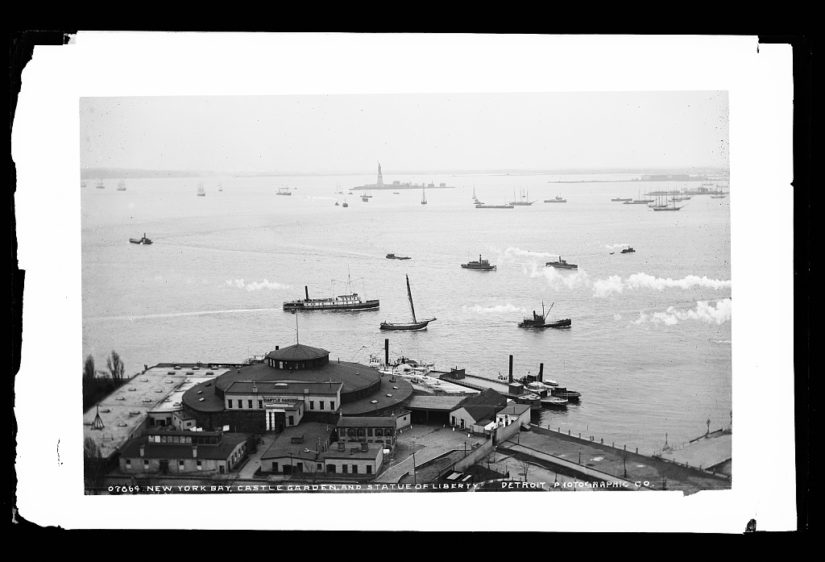
On another note, it was Carl Feiss’s idea to adaptively reuse Castle Clinton as a museum for "marine commerce and harbor relics pertaining to the Port of New York.”11
- Carl L. Feiss Papers, ca. 1928-1991
Division of Rare and Manuscript Collections
Carl A Kroch Library
Cornell University
Ithaca, NY 14853
Carl Feiss Papers
Drawings & Archives
Avery Architectural & Fine Arts Library
1172 Amsterdam Avenue
Columbia University
New York, NY 10027
Tel: (212) 854-4110
Email: avery-drawings@libraries.cul.columbia.edu
Interview with Carl Feiss by Charles Hosmer, Jr. 20 July 1981
Papers of Charles Bridgham Hosmer, Jr.
Archives and Manuscripts Department
University of Maryland
Hornbake Library
College Park, MD 20742
Tel: (301) 405-9058
Fax: (301) 314-2709
Email: archives-um@umd.edu
Copy of interview also available at:
New York Preservation Archive Project
174 East 80th Street
New York, NY 10075
Tel: (212) 988-8379
Email: info@nypap.org
- Interview with Carl Feiss by Charles Hosmer, Jr., 20 July 1981.
- Robert Thomas, “Carl Feiss, a Pioneer of Urban Preservation, Dies at 90,” The New York Times, 27 October 1997.
- Ibid.
- Kathleen McLaughlin, “Mental Health and City Linked; Tensions in Urban Trends of Man Discussed in Conference Under U.N.,” The New York Times, 12 March, 1957, page 35.
- Interview with Carl Feiss by Charles Hosmer, Jr., 20 July 1981.
- Ada Louise Huxtable, “Program to Save Historic Sites Urged in Report to White House,” The New York Times, 30 January 1966.
- Interview with Carl Feiss by Charles Hosmer, Jr., 20 July 1981.
- Ibid.
- Gregory F. Gilmartin, Shaping the City: New York and the Municipal Art Society (New York: Clarkson Potter/Publishers, 1995).
- Carl Feiss. Letter to the editor, The New York Times, 27 April 1958.
- Anthony C. Wood, Preserving New York: Winning the Right to Protect a City’s Landmarks (New York: Routledge, 2008), page 65.